


Sentiment gauges are pinned in Extreme Fear while $SPY, $QQQ, and $IWM sit just a few percent off recent highs. Here is how I am positioning into a holiday week full of data.
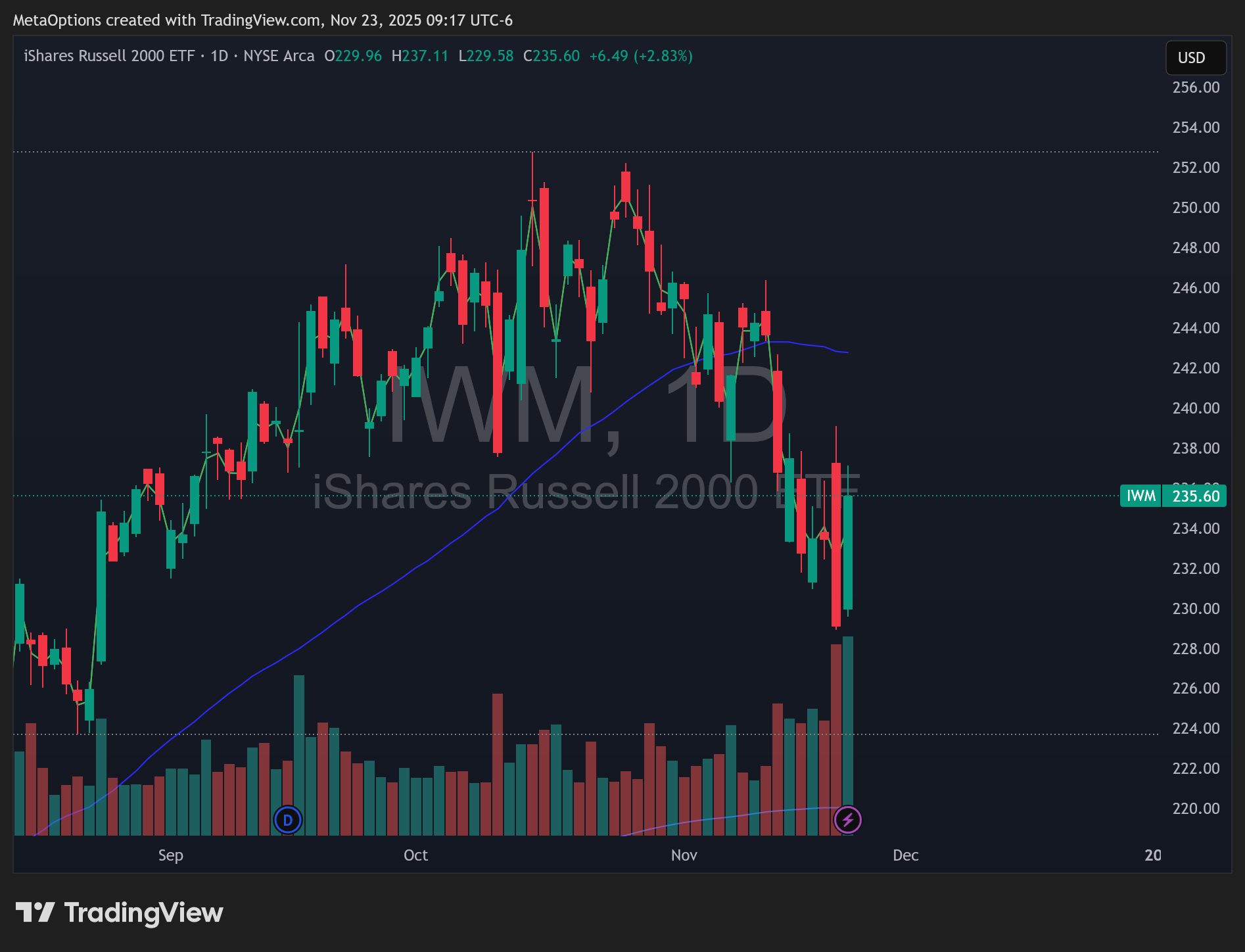
Last week we finally got the air pocket everyone kept calling for. $SPY dropped from the low 680s to 650 in a straight shot before bouncing. $QQQ slid from the low 620s to the 580 handle. $IWM broke 230 before squeezing back over 235. The tape feels nasty, but we are still only a few percent off the highs while the sentiment gauges are screaming panic. That combination is the whole story this week.
🔹 See all Macroviews: https://csplab.substack.com/tag/macroview
Sentiment first: Fear and Greed
The Fear and Greed Index sits at 11, which is solidly Extreme Fear and one of the lowest readings of the year.
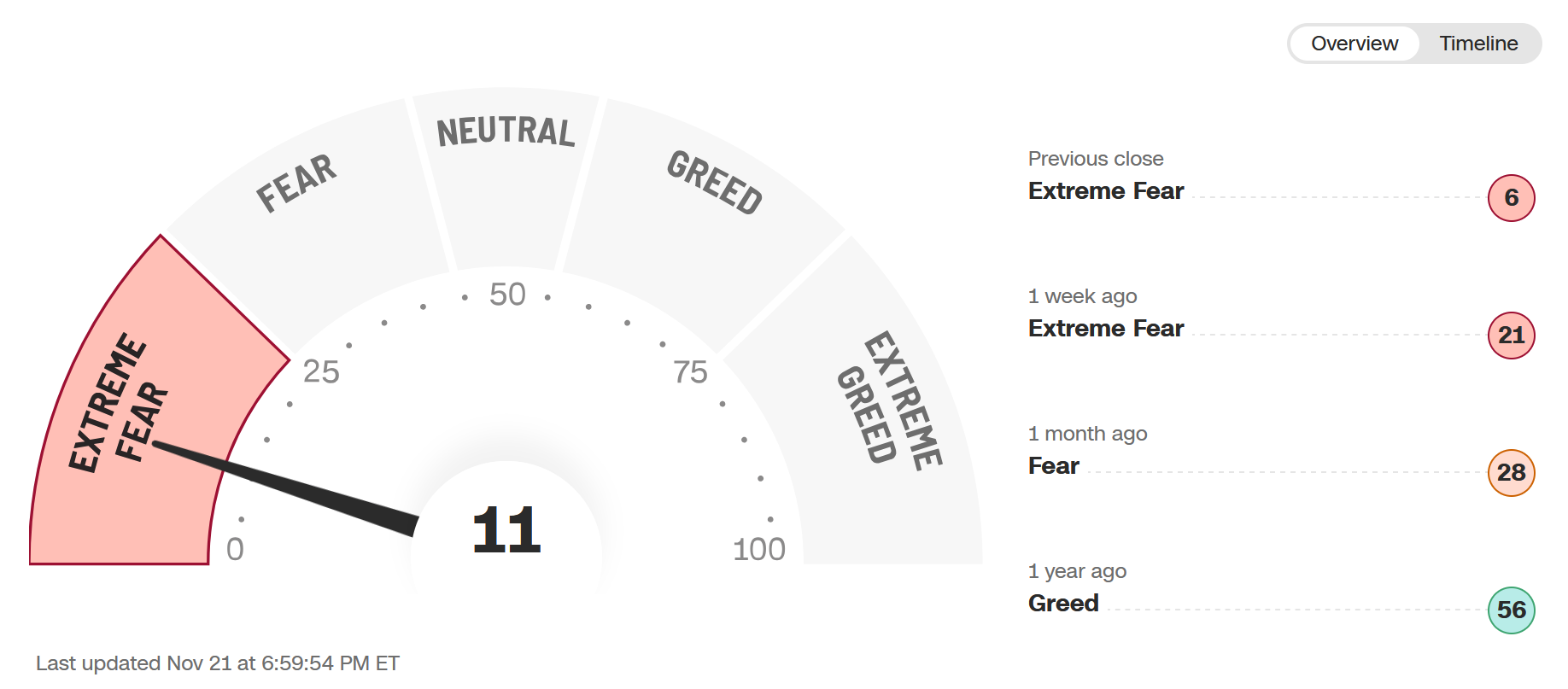
A week ago it was still in the Extreme Fear band in the low 20s and a month ago it sat in the high 20s, so emotion has ratcheted lower even as price is only down single digits from the peak. One year ago the same gauge was in Greed territory, near the mid 50s, with lower volatility and much less gold heat.
The AAII survey of individual investors backs this up. Latest numbers show:
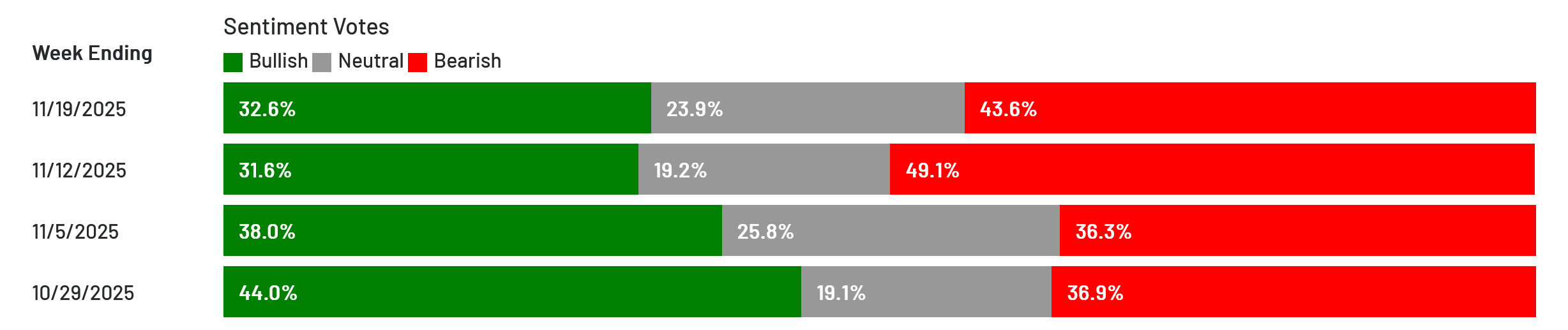
Bullish: about 33 percent
Neutral: about 24 percent
Bearish: about 44 percent
That puts the bull minus bear spread near minus 11 percent, well below the long run average that sits mildly positive. Retail is leaning cautious and there is real fatigue in the six month outlook.
On the volatility side, VIX trades near 23 to 26, the highest zone since the spring.
Put that together and you get a market that has pulled back, but not collapsed, while the emotion readings look like mid drawdown levels. That setup usually favors a tactical buy the dip rather than a fresh crash call, as long as the macro does not break.
Trend check: where the charts stand
$SPY
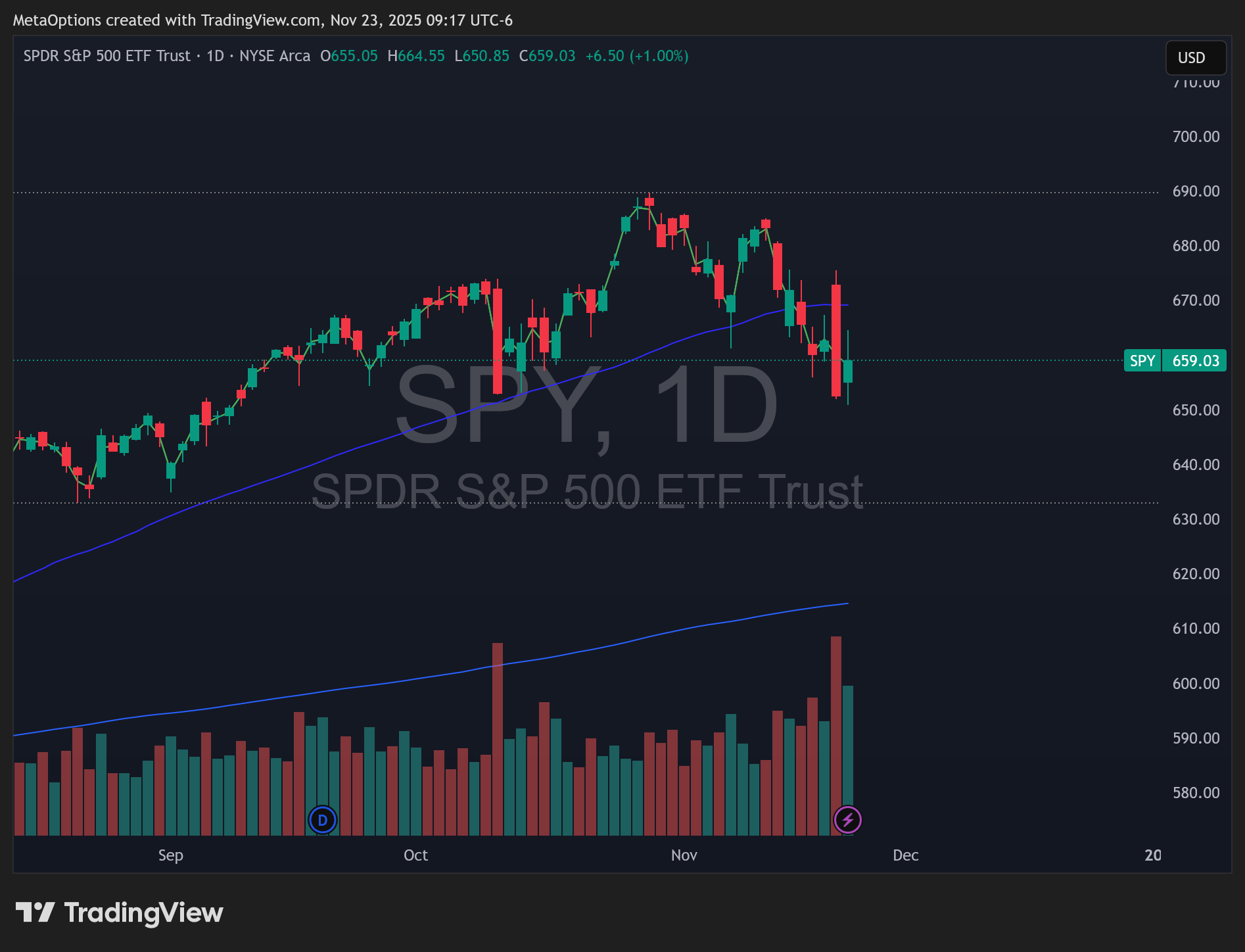
Close Friday: 659.03
Last Friday: 671.93
Off the recent high near 683 by about 3.5 to 4 percent
The daily uptrend from the summer is dented but not gone. Price flushed from the 680s to a low near 651 then snapped back into the high 650s. The 50 day area sits just overhead in the low 660s, with the 200 day much lower near the low 610s.
Key levels this week:
Resistance: 666 to 672, then the prior high zone around 680 to 684
First support: 650 to 652
Bigger line in the sand: 644 to 646, which lines up with the prior breakout shelf and a cluster of moving averages
As long as 644 holds on a closing basis, this still looks like a sharp correction inside a larger uptrend. Lose that and the chart flips into a real top pattern.
P.S. If you want a breakdown of my favorite ticker next week leave a comment below.
QQQ 0.00%↑
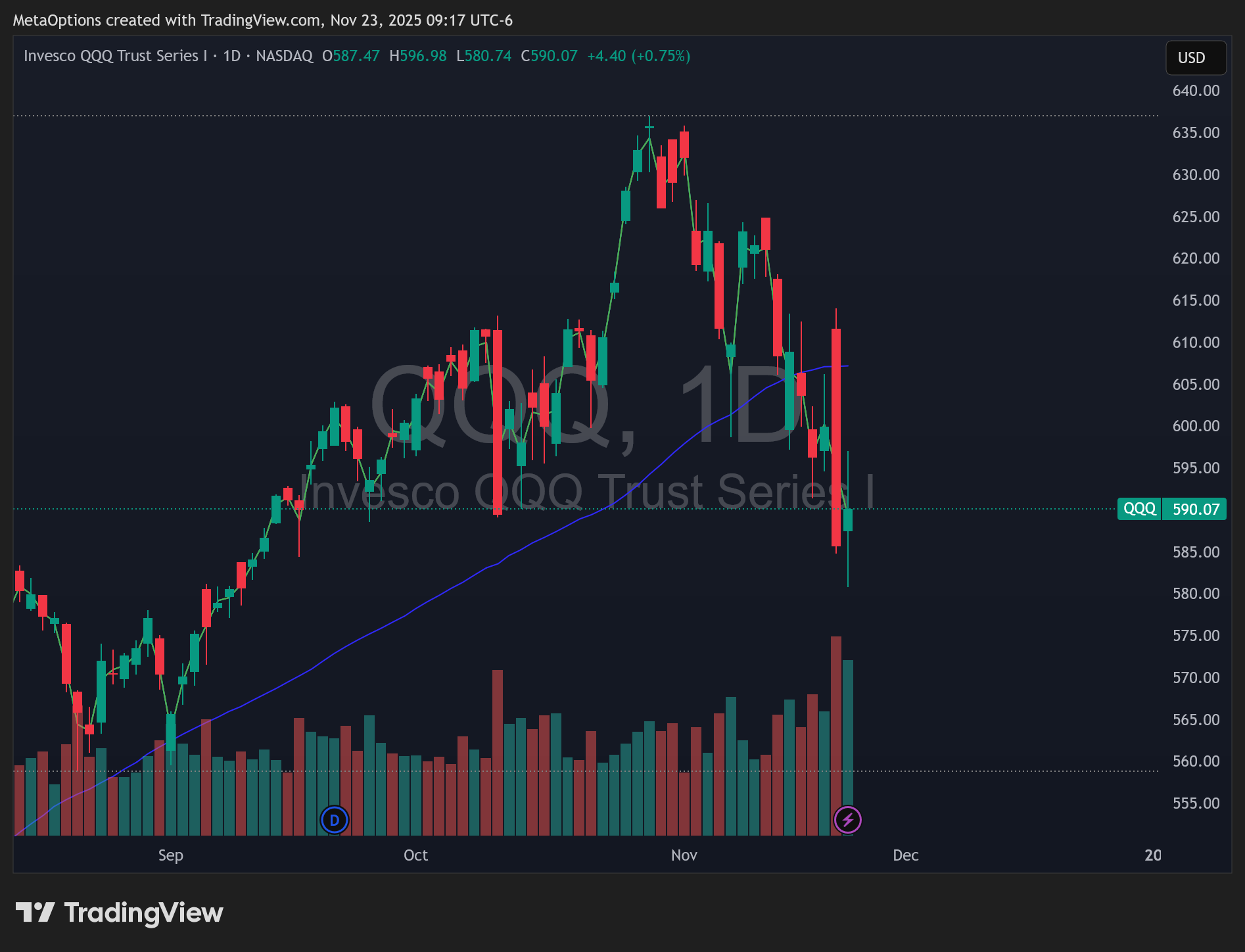
Close Friday: around 592
Last Friday: about 609
Recent high: around 621 so still roughly 5 percent below the peak
Tech took the bigger hit. $QQQ saw a brutal two day selloff around earnings and macro headlines, knifing from above 610 to a low just under 581 before bouncing.
Key levels:
Resistance: 598 to 600 first, then 610 to 612, then the old high area near 620
Support: 580 to 583 as the first bounce zone, then 573 to 575 if fear spikes again
As long as 580 holds, this is a violent shakeout off the highs. A clean close back over 600 would tell you buyers are regaining control
$IWM
Close Friday: about 236
Last Friday: roughly 237 to 238
Recent high: low 250s
Small caps broke first, then bounced hard. Price undercut 230, tagged the low 229s, and ripped back above 235. The 50 day sits overhead in the 240 to 242 zone.
Levels that matter:
Resistance: 240 to 242 on the first test, then 244 to 246
Support: 230 to 232, then the recent low near 229, then the more important shelf down near 225
$IWM needs to reclaim and hold above 241 to argue that breadth is ready to lead again. Until that happens, every bounce is still just repair work.
Macro backdrop: rates, dollar, gold, oil
This is not just an equity story. The cross asset picture gives the context.
10 year Treasury yield sits near 4.06 percent, down a touch from 4.14 percent a week ago.
The US dollar index (DXY) hovers near 100.2, basically flat but firm.
Gold trades around 4,060 to 4,080 per ounce, still near record highs.
WTI crude sits just under 58 after a three session slide, its weakest area in months.
So you have:
Yields slightly off the highs, not collapsing
A firm but not surging dollar
Gold screaming that people want hedge assets
Oil trading like global growth expectations are getting clipped
That mix lines up with a late cycle, risk off wobble rather than a clean growth scare or a pure inflation scare.
The week ahead: what can move the tape
Holiday week, but not quiet. Some key prints were pushed into this week by the shutdown, so Tuesday and Wednesday are stacked. Markets are closed Thursday and have an early close Friday.
Tuesday Nov 25
September Retail Sales
Producer Price Index (PPI) and Core PPI
S&P CoreLogic Case Shiller home price index
Pending Home Sales
Business Inventories
Conference Board Consumer Confidence
This is the big macro day. Retail and PPI tell you about the consumer and inflation. Case Shiller and pending home sales show whether housing is bending or just plateauing. Confidence ties it together.
Wednesday Nov 26
Initial and continuing jobless claims
Durable goods orders
Chicago PMI
Fed Beige Book
All of these arrive in thin, pre holiday conditions. Claims will be read as a check on labor softness. Durable goods and PMI frame the manufacturing side that has already been struggling. The Beige Book will be combed for hints on wage pressure and demand.
Thursday and Friday
Thursday: Thanksgiving holiday, no trading
Friday: short session and a flood of Black Friday sales commentary, but no major scheduled data
The combination of compressed data and thin liquidity usually exaggerates the first reaction. Expect sloppy gaps and weird intraday ranges.
What the Street is saying
A few big themes from recent notes and surveys:
Macro base case is still a soft landing. Most desks see slowing but not collapsing growth and expect gradual easing in 2026, even as odds of a December cut have faded.
Positioning is bullish under the surface. The latest Bank of America fund manager survey shows equity exposure back near cycle highs and cash at about 3.7 percent, a level that has often flashed a medium term sell signal in the past.
Narrative: AI bubble risk and rate cut doubt. Fund managers point to AI and overinvestment as the top tail risk while also worrying that the Fed may not deliver the rate help markets have priced in.
Volatility signals are elevated but not at washout levels. VIX in the mid 20s, extreme readings on put call ratios, and a crush in breadth all argue for a short term reflex move, not necessarily a durable bottom yet.
Gold and bonds hint at hedging, not outright panic. Gold at four thousand plus and a ten year that refuses to break under four percent suggest investors are buying insurance while still clinging to the soft landing view.
So the story is split. Fast sentiment gauges say fear. Positioning surveys say a lot of people are still leaning long risk and counting on the Fed to show up.
Wrapping it up
Neutral price location plus extreme fear is a sharp change from the summer regime where optimism and momentum fed each other. We are now in a corrective phase where data, not FOMO, will set the tone.
Base case for the next week or two
$SPY holds the 650 shelf on closing basis and works back toward 666 to 672.
$QQQ defends 580 and grinds back through 598 to 600, with a shot at 610 if data is friendly.
$IWM respects 230 and slowly rebuilds toward 241 to 244.
Fear gauges stay in the fear area but lift off the single digit readings as price stabilizes.
This path fits a messy, volatile range trade with a bullish tilt. Retail fear plus still supportive macro would invite systematic and dip buyers once the first reactions to PPI and retail sales pass.
Risk case
PPI and retail come in hot on price or weak on demand, or both.
The ten year pops back above 4.2 percent and the dollar pushes higher.
$SPY breaks under 650 and trends toward 640 and the mid 630s.
$QQQ loses 580 and tests the low 570s.
$IWM slides under 230 and revisits the 225 zone.
In that world, extreme fear would be justified and we would treat the summer highs as a more important top.
For now, the evidence still supports respecting support first and fading fear spikes rather than chasing downside.
Trading bias
The combination of extreme sentiment and still intact higher timeframe trends is friendly for selling options, but the calendar and volatility argue for moderation. Size is the main risk lever.
When to sell
Prefer red opens near support over green opens into resistance.
Index focus: look for 650 to 652 on $SPY, 580 to 585 on $QQQ, and 230 to 232 on $IWM as the first zones where CSPs and put spreads make sense.
Wait for the Tuesday data to hit before going full size. Let the first spike in VIX and price wash through.
Sizing
Keep gross collateral in the 30 to 50 percent range early in the week.
Add in thirds if price tags your support zones and sentiment stays washed out.
Avoid pushing to max collateral into a short Friday session where liquidity can vanish quickly.
Strike selection and management
Stick with 7 to 14 DTE on index CSPs and quality single names.
Target strikes where you would be comfortable owning the underlying through a further 3 to 5 percent pullback.
Take 50 to 70 percent profits with GTCs instead of trying to squeeze every cent in a noisy tape.
If price closes under your short strike or delta climbs over about 0.35, plan to roll down and out one to two weeks for a net credit instead of turning it into a hope trade.
Assignment playbook
If you do get assigned:
Sell covered calls 7 to 14 DTE around 0.30 to 0.35 delta.
Focus on weekly ROC, not calling the exact top.
If the trend improves and the macro picture stabilizes, roll calls up and out to protect shares while keeping premium flowing.
Using spreads in higher vol
If you want defined risk around the Tuesday and Wednesday releases:
Short put verticals on $SPY or $QQQ with width set so that your credit is about one third of the spread.
Place them slightly closer to the money than you would for naked CSPs since the risk is capped.
Same rules on timing and taking profit.
Bottom line: indices are only a small step down from the highs while the sentiment dashboards are lit up like it is a full blown crash. That usually favors the patient seller of optionality who can keep size under control, respect the obvious levels, and let the macro prints do the talking before making big bets.
Excellent analysis! Given this persistant divergence between sentiment and price action, do you see this as a healthy reset, or a sign of deeper underlying psychological shifts in investor behaviour?