


A fast read on rates, the dollar, gold, and the levels on $SPY $QQQ $IWM this week.
The charts say everything is fine. The internals say something is breaking
This is one of those weeks where the story does not match the mood. Indexes are still sitting near their upper ranges, but the tone of the market changed this week. High beta names got hit. Crypto rolled over. Volume rose on down days and faded on up days. The surface looks steady. The internals look stressed. This is the kind of week that keeps traders cautious even when the index charts look fine at first glance.
Let’s break it down.
🔹 See all Macroviews: https://csplab.substack.com/tag/macroview
Sentiment
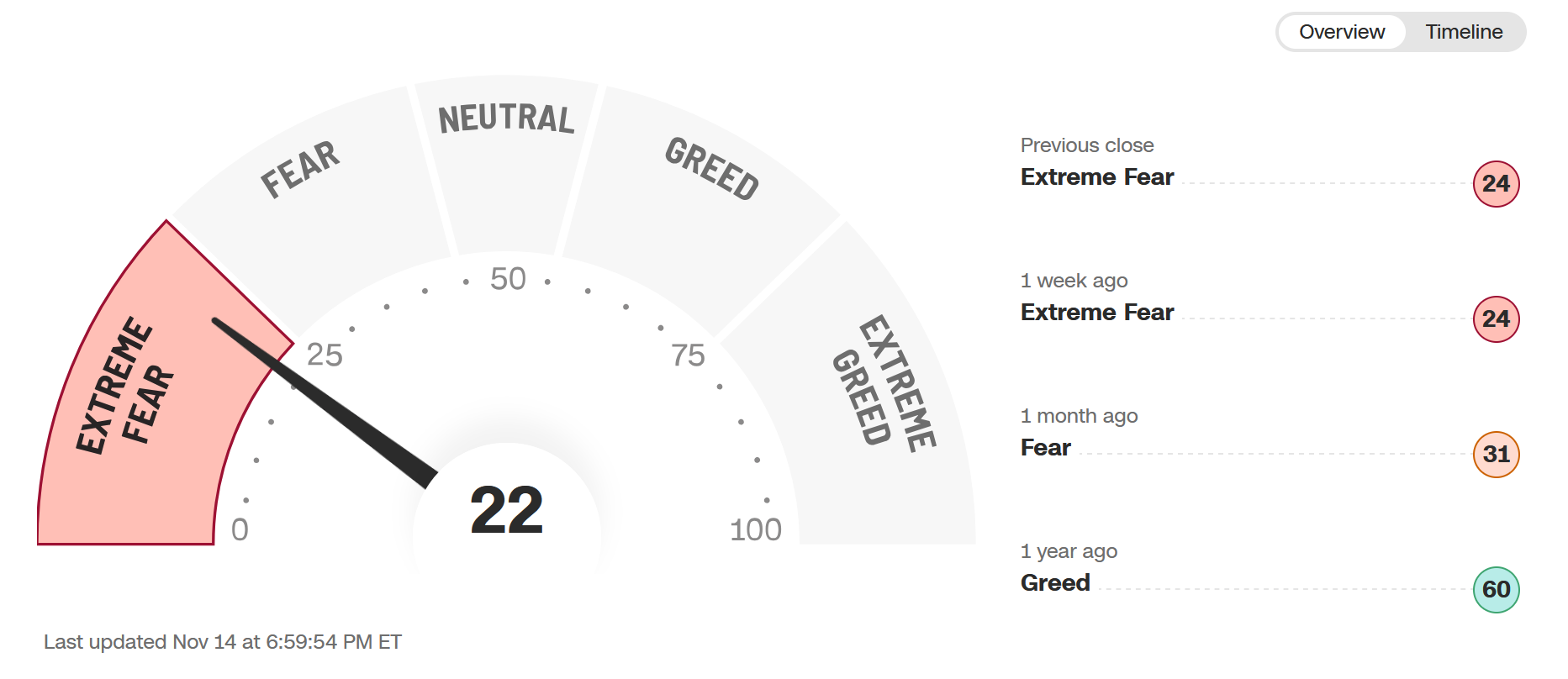
The Fear and Greed Index sits at 22 which is deep in Extreme Fear territory. Last week was 24. Nothing improved.
AAII sentiment shows 31.6 percent bulls, 19.2 percent neutral, and 49.1 percent bears. This is the most bearish skew of the past 4 weeks.
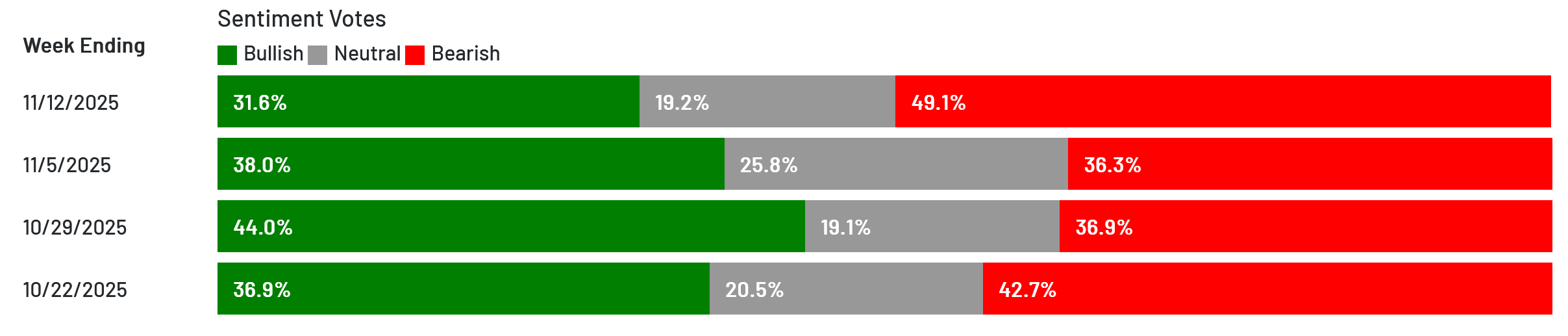
This negative sentiment is not linked to falling prices. It is tied to thin leadership, weak volume on green days, and rising volume on red days. When the market floats higher on low participation, the move is usually built more on short covering and passive flows than real buying.
That is the environment right now.
Trend Check: $SPY $QQQ $IWM
Below is the updated price action combined with volume analysis. Volumes help confirm or reject trend and momentum. This week they matter a lot.
SPY
Daily
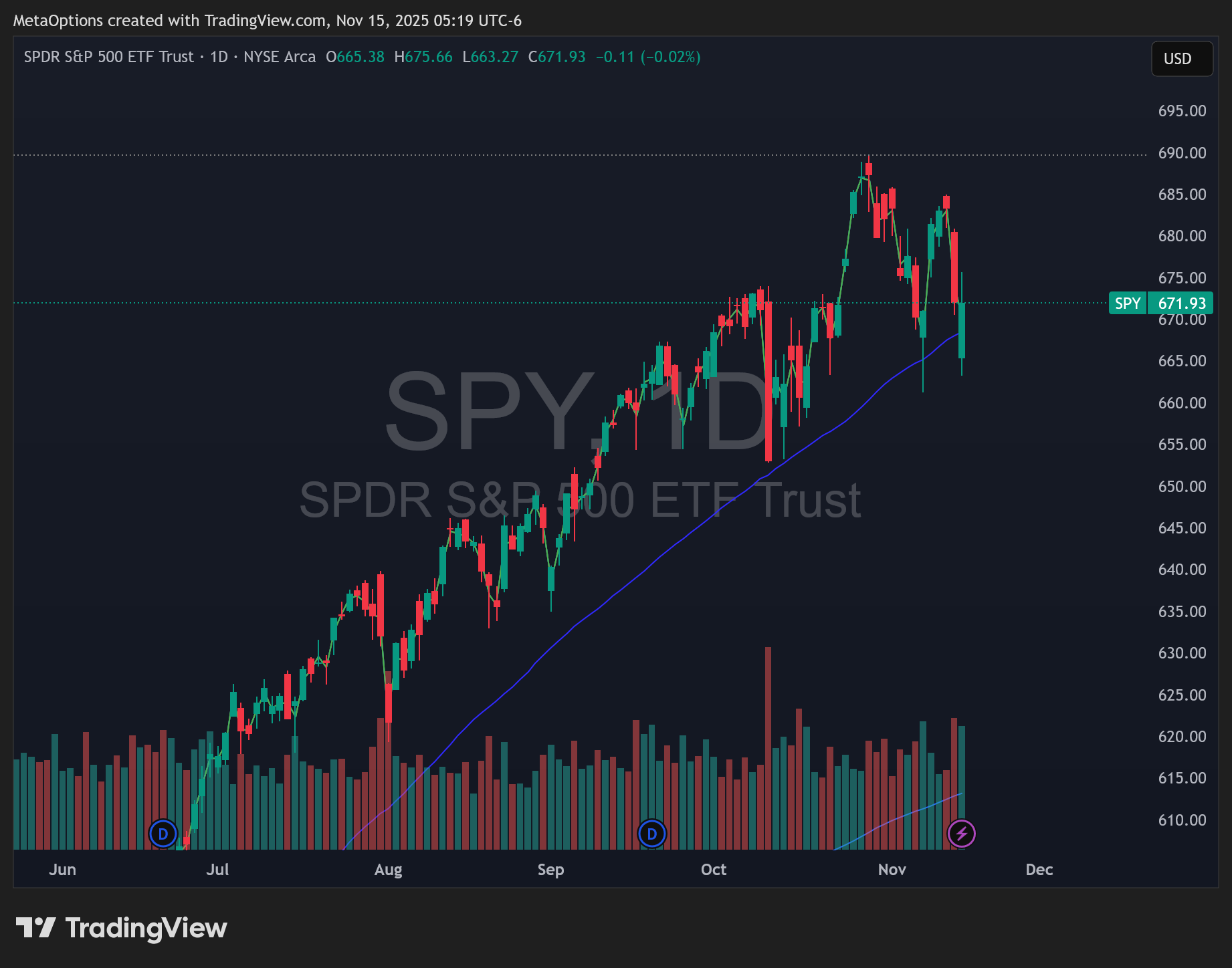
$SPY trades near 671 after rejecting the 685 to 690 band. It bounced off rising support in the mid-660s, but volume tells the truth. Volume increased during the drop from the highs and faded during the rebound. That is not strength. That is caution.
4-hour
$SPY remains stuck in a range between 665 and 685. Every touch of 680 gets sold. Volume spikes appear on red candles near the lower half of the range. Buyers show up, but without conviction.
QQQ
Daily
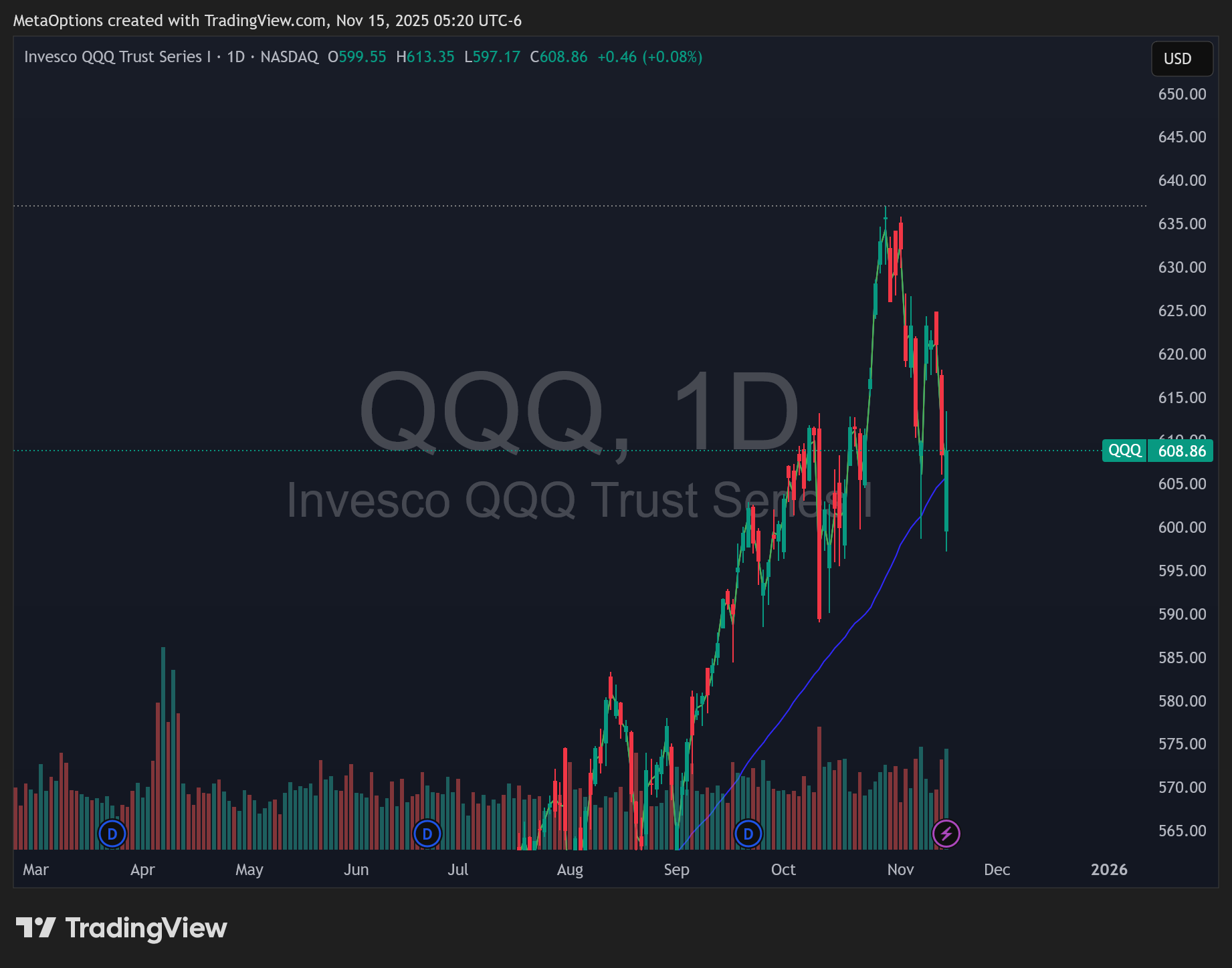
QQQ sits around 608 to 612 after pulling back from 635. The chart looks controlled, but high beta names inside the index got hit harder than the ETF shows. The bounce off 600 had light volume. No signs of strong demand.
4-hour
Sideways and choppy. Lower highs forming. Sellers lean on every test of the mid-range. A close under 600 would open more downside.
IWM
Daily
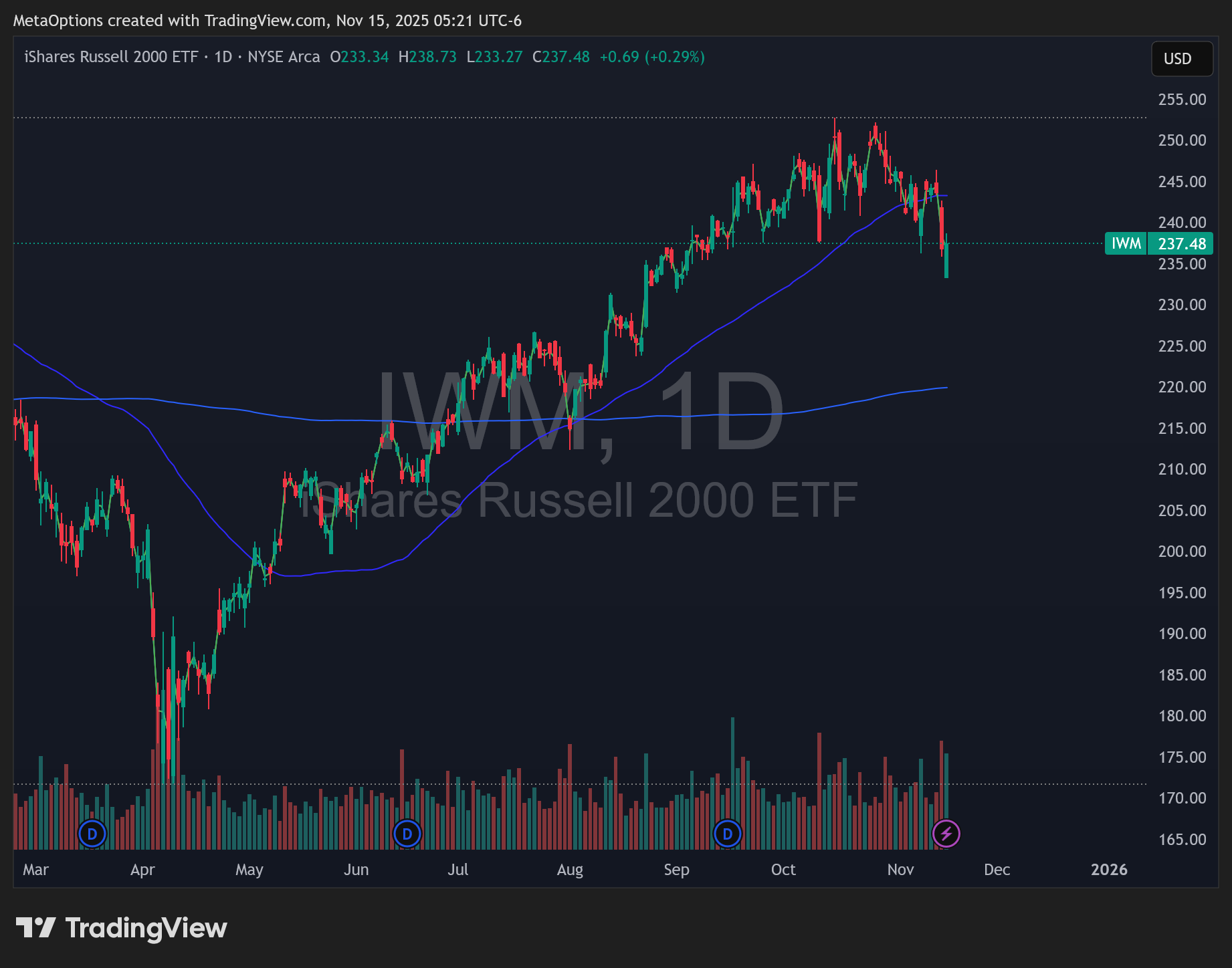
IWM remains the weakest of the big 3 index ETFs. It failed almost instantly at 250 and now trades near 237. Volume picked up during the selloff which confirms real rotation away from small caps. Rebound volume stayed light.
4-hour
Range remains 235 to 250, but price is pinned near the bottom. Volume spikes appear during selling, not buying. Until buyers push above 244, there is no confirmation of strength.
P.S. If you want a breakdown of my favorite ticker next week leave a comment below.
Rates and Yield Curve
The 10-year sits near 4.2 percent.
The 2-year sits near 3.9 percent.
The spread is roughly +30 to 35 bps.
The curve spent an unusually long time inverted and is only now pushing back toward normal. Historically, this happens late in a cycle, not early. A steepening curve at this stage is not a comfort signal. It usually means slower growth ahead with cuts arriving late.
Dollar, Gold, Oil
Dollar:
The DXY trades around 100 to 101, noticeably softer compared with earlier in the year.
Gold:
Gold remains near record levels with spot prices just under 4100.
Oil:
Crude oil sits near 88 dollars, well off the triple digit spike but still elevated.
This is a typical late cycle mix. A softer dollar. Persistent strength in gold. Oil sitting high but no longer surging. Markets are flashing stress but not full danger.
Volatility and Breadth
VIX:
Around 24 to 25, above its long run average.
Breadth:
Only about 43 percent of S&P 500 names trade above their 50 day moving average. That number fell toward 40 percent during last week’s selloff. In simple terms, the index has held up but very few names are carrying it.
Narrow leadership is a warning sign, especially with volume patterns showing selling pressure under the surface.
Macro Data
This is where the shutdown fallout shows up.
Inflation (September):
CPI headline 3.0 percent
CPI core 3.1 percent
PCE headline 2.5 percent
PCE core 2.7 percent
The October prints never arrived because the government was shut down. Traders are flying half blind here. No fresh inflation. No new consumer spending data. No updated wage growth data.
GDPNow:
Early Q4 estimate is near 1.8 percent, down from prior quarters.
Jobs:
Jobless claims stay in the mid 200k range, steady but drifting higher.
The Fed
The Fed cut rates 25 basis points at the previous meeting. That was the first cut of this cycle. Officials keep repeating that the next steps depend entirely on data. But with delayed data, there is more guesswork involved.
Rate futures now price only about 30 percent odds of another cut in December.
The market is uncomfortable because the Fed is uncomfortable.
Earnings and Catalysts
Earnings season is almost done, but there is still one major event.
Nvidia reports Nov 19.
$NVDA has become a macro event. It drives the entire growth trade and sets the tone for tech. The guidance matters even more than the numbers.
Also worth attention in the next stretch:
$WMT, $TGT and other large retailers that show us how the consumer is holding up into the holidays.
On the economic side, the rescheduled CPI and PPI releases for October could hit at any moment, depending on when agencies finish clearing backlog.
This creates a rare environment. Traders know the next big print is coming, but nobody knows when.
The Playbook
Here is the high level read based on this week’s action.
1. Fear stays high while price holds up.
This combination usually leads to sharp moves once new data drops.
2. Volume patterns show weak buying and real selling.
Every index is bouncing off support on lower volume. That means the rallies are fragile.
3. Breadth is narrow and still shrinking.
Only a small handful of names are keeping indexes afloat.
4. Yield curve re-steepening is not a comfort sign.
It usually arrives late in a cycle.
5. Nvidia controls next week.
A strong earnings reaction could stabilize the entire growth complex. A weak reaction could trigger selling pressure that the weak breadth cannot absorb.